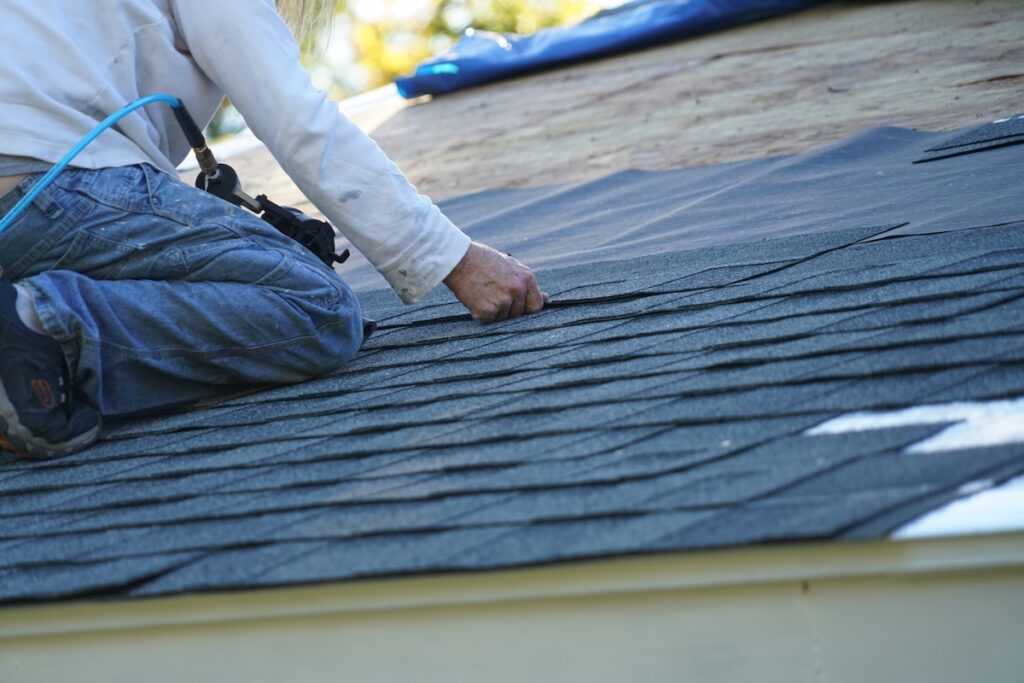
How Damaged Starter Shingles Affect Roof Edge Protection
Most roof edge problems do not begin with a dramatic interior leak. They begin where the roof ends, at the perimeter, where water leaves the surface, and wind gets its first chance to lift the shingles. Starter shingles matter in that narrow strip more than many homeowners realize because they help lock down the first course and support the way water moves off the roof. When that strip is damaged, the edge no longer functions as a clean transition and begins to act as a weak point. That is often when roof repair eagle mountain becomes less about replacing one visible piece and more about correcting a chain of edge-related problems.
Starter shingles do not get much attention because they are mostly hidden beneath the first row of shingles. From the ground, most homeowners would not be able to tell whether their homes are in good shape. Even so, they play an important role at the roof edge. When they are secure, they help hold the outer shingles in place and give wind less opportunity to get underneath. They also help water move off the roof more cleanly. When they dry out, crack, shift, or are not installed correctly, the edge becomes easier to damage.
Why They Matter
The edge of a roof is more exposed than the sections farther in. Wind hits it first, rain keeps moving across it, and constant sun and temperature changes wear it down over time. Because of that, the materials at the perimeter need to stay tight and secure. Starter shingles help provide that support.
They also help keep the first row of shingles from lifting or shifting. If that support weakens, the outer row can loosen more easily. What looks minor from the ground can affect how well the edge holds during heavy wind or rain. Once the shingles at the perimeter stop sitting tightly together, that part of the roof becomes more vulnerable.
That is why edge damage can go unnoticed for a while. The roof may still appear fine overall, even as the perimeter starts to break down. By the time the problem is obvious, the surrounding shingles may already be affected.
How Failure Starts
In many cases, the trouble starts when the edge begins to move. The adhesive can lose strength over time. Shingles can become dry and brittle. Nails may not have been placed well during installation. Sometimes the starter course was not properly lined up from the beginning, leaving the edge with less support than it should have had.
Wind often exposes the problem first. Once it gets under a loose section, it can start lifting the first course a little at a time. That movement puts more stress on the seal and on the shingles around it. What begins at one small section of the roof edge can spread because the surrounding materials are no longer held in place as firmly.
Temperature changes add to the wear. Roofing materials expand in the heat and tighten again when temperatures drop. Over time, that repeated movement can further weaken the roof edge. In many cases, the damage does not happen all at once. It develops gradually, with the separation becoming more noticeable as the seasons pass.
What Water Does Next
Once the roof edge starts to fail, water does not always show up inside right away. It can slip under the first row of shingles, soak into the underlayment or wood below, and spread before anything becomes visible indoors. That delay is one reason roof edge damage is often missed at first.
A damaged starter strip can also affect how water moves off the roof. Instead of draining cleanly away, runoff may hang near the edge, move backward, or get beneath the shingles where the seal has weakened. If that continues, moisture can begin affecting the roof deck. Trim boards and fascia can also be damaged because they sit so close to the edge, where water is supposed to drain properly.
In many homes, the first warning signs are subtle. Paint near the top of a wall may begin to peel. The attic may smell damp. Insulation near the perimeter may feel wet or look compressed. Some homeowners notice a stain near the outer edge of a ceiling rather than near the middle of the room. Signs like these can often be traced back to a roof edge issue that began outside with a small problem in the starter shingles.
What Inspectors Look For
A roof inspection should cover more than the shingle that looks loose or missing. The goal is to check how the entire edge is holding up. That includes the first course of shingles, the starter strip underneath, the drip edge, the fasteners, and the condition of the surrounding materials.
Small details can reveal a lot. The shingle line may look uneven along the edge. Some areas may no longer sit flat. Granules in the gutters can point to wear near the perimeter. A bent or out-of-place drip edge can also cause trouble because it affects how water leaves the roof. If that metal edge is loose, it can make an already weak area more likely to leak.
The right repair depends on how far the moisture has spread. In some cases, the issue is limited to one section near the edge. In others, the damage extends below the shingles and into the underlayment or wood beneath. That is why a careful inspection matters. A quick patch may cover the visible problem, but it will not solve much if the damage has already moved farther into the roof system.
Why Early Repair Matters
Starter shingle failure is one of those issues that gets more expensive when it is ignored. The edge of the roof is not a cosmetic detail. It is part of the system that keeps wind from getting under the shingles and helps runoff leave the surface the way it should. Once that edge starts to fail, the surrounding materials often become more easily damaged as well.
Addressing the issue early can prevent a more involved repair later. Replacing or resetting a small section near the perimeter is very different from opening up an area where water has already softened the deck or affected the trim. The longer the edge remains vulnerable, the more chance the weather has to worsen the problem.
That is also why roof repair eagle mountain should begin with a close look at the perimeter when signs of edge wear appear. The visible damage may be small, but the way it changes wind resistance and water flow determines how serious the repair becomes.
Conclusion
Damaged starter shingles weaken roof edge protection in a very specific way. They reduce the support beneath the first course, make wind uplift easier, and give water more opportunity to move beneath the surface. Because that failure starts at the perimeter, it often stays out of sight at first. A roof can look mostly fine from below, while the edge is already losing its ability to protect the materials around it.
That is why starter shingles deserve more attention than they usually get. When the edge is secure, the rest of the roof has a better chance of holding up under normal weather stress. When that strip fails, the perimeter becomes the place where larger problems begin.